
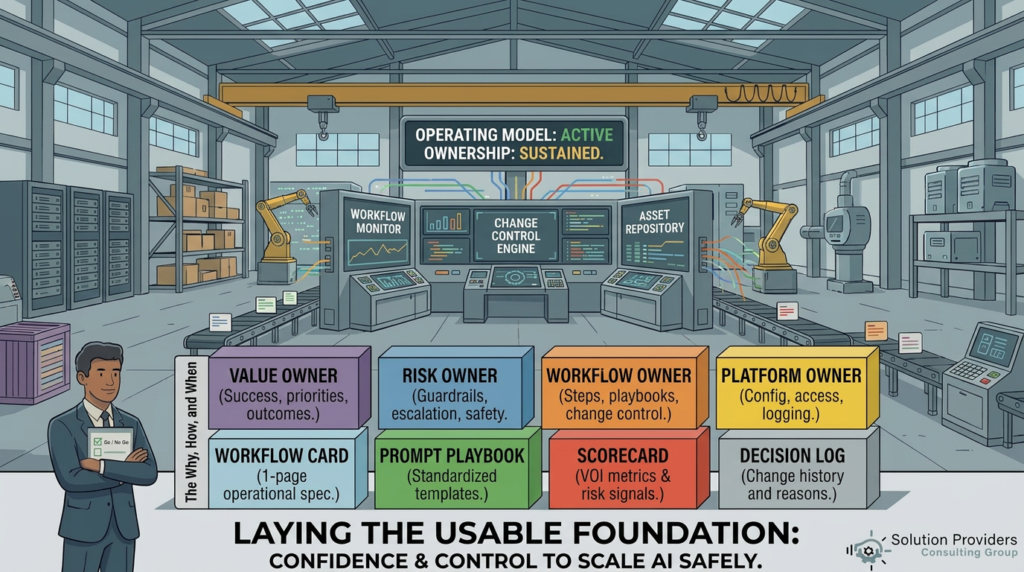
The Operating Model (Who Owns What After the Pilot and How It Stays Owned)
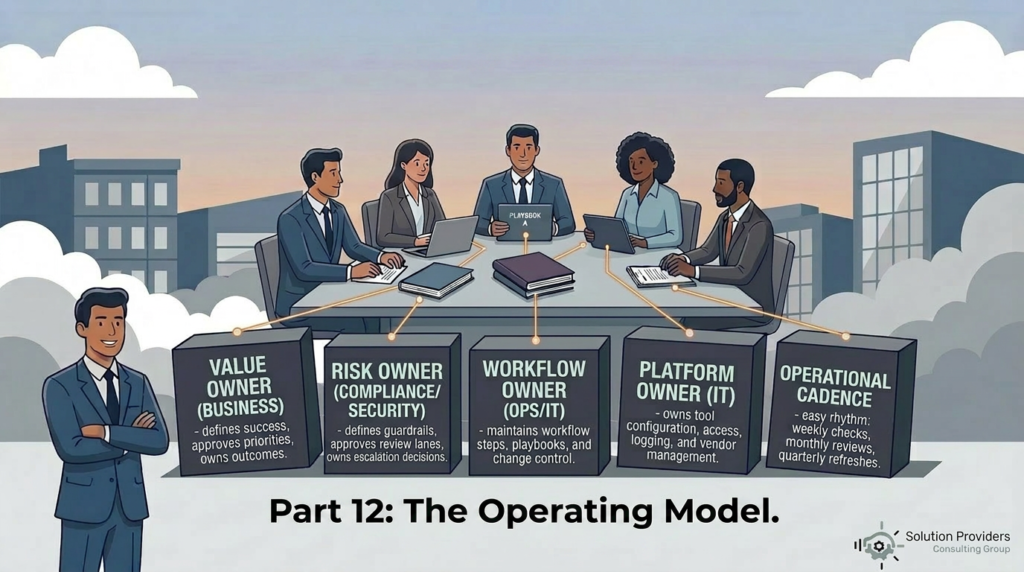
Most AI projects don’t die because they fail. They die because nobody owns them after the initial excitement. The operating model is how you keep the work alive – without building a bureaucracy. If you’ve made it this far in the foundation series, you’ve probably noticed a pattern: The difference between “we tried AI” and […]
Prompting as a Business Operation (Playbooks, Not Hero Prompts)
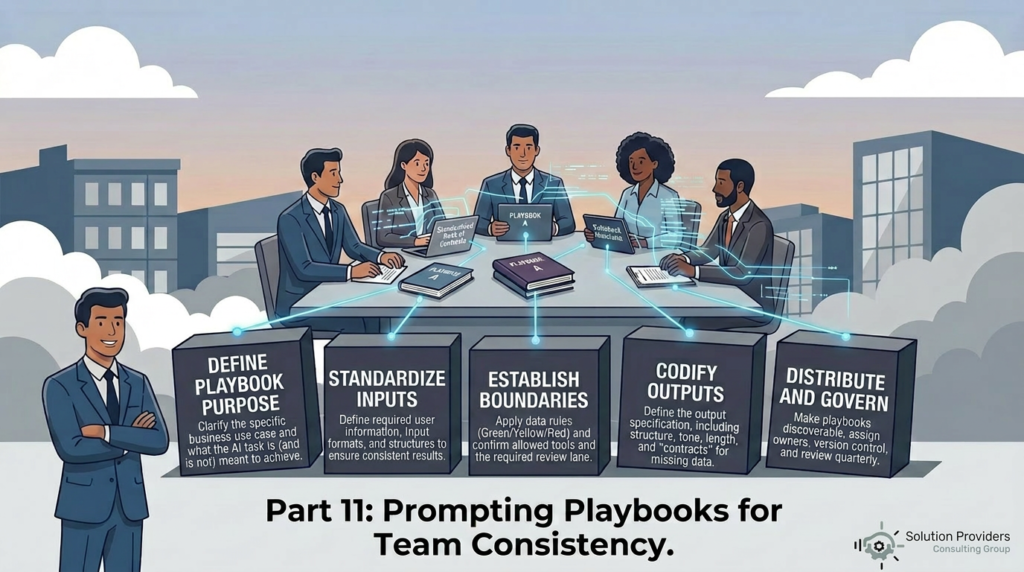
If your AI results depend on one or two power users, you don’t have a capability – you have a fragility. The goal is repeatable outputs that any trained teammate can produce. Here’s a pattern we see all the time in mid‑market AI adoption: One person gets great results with AI. Everyone else tries it, […]
Measurement That Matters (Proving VOI Beyond ‘Time Saved’)
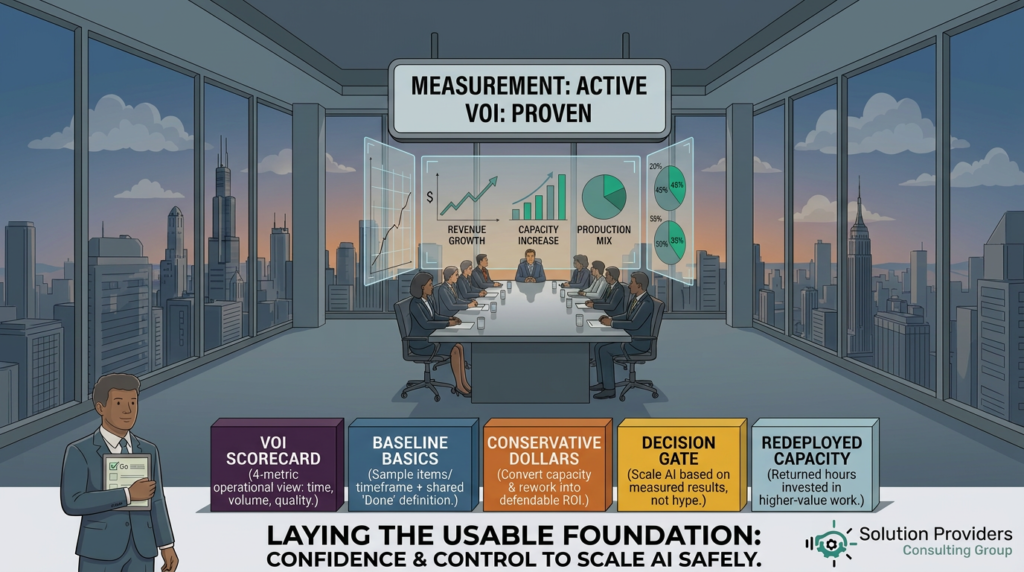
If the only metric you have is ‘hours saved’, you’ll end up in an argument about whether the hours were real. The better question is: what improved in the business – and can we see it in the workflow? Most AI projects don’t fail because the model is bad. They fail because nobody can prove […]
Human‑in‑the‑Loop (Where Review Is Required vs. Optional)
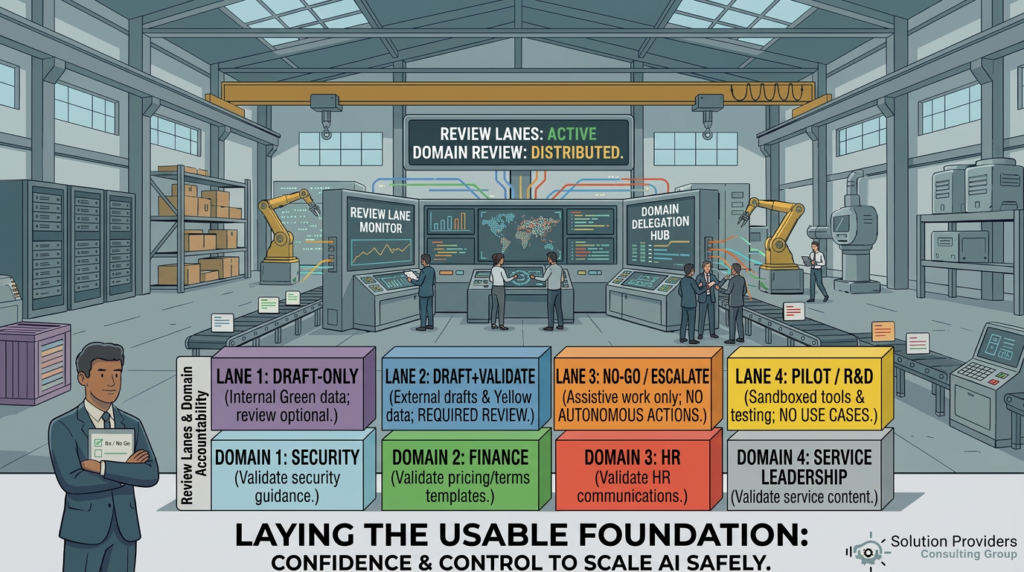
The fastest way to kill AI adoption is to route everything through a single ‘approver.’ The fastest way to create avoidable risk is to route nothing through anyone. The answer is simple – a review map. When leaders hear ‘human‑in‑the‑loop’, they often picture a heavy approval workflow – tickets, queues, and bottlenecks. But that’s not […]
The Minimum Viable AI Policy (A One‑Pager People Will Actually Follow)
If your AI policy reads like a legal document, operators won’t use it- and adoption will route around it. A minimum viable AI policy is short, specific, and tied to the tools and workflows you actually support. Let’s say the quiet part out loud: most policies fail for the same reason most diets fail – […]
How to Scale AI from 2 – 3 Workflows to 10 (Without Chaos)
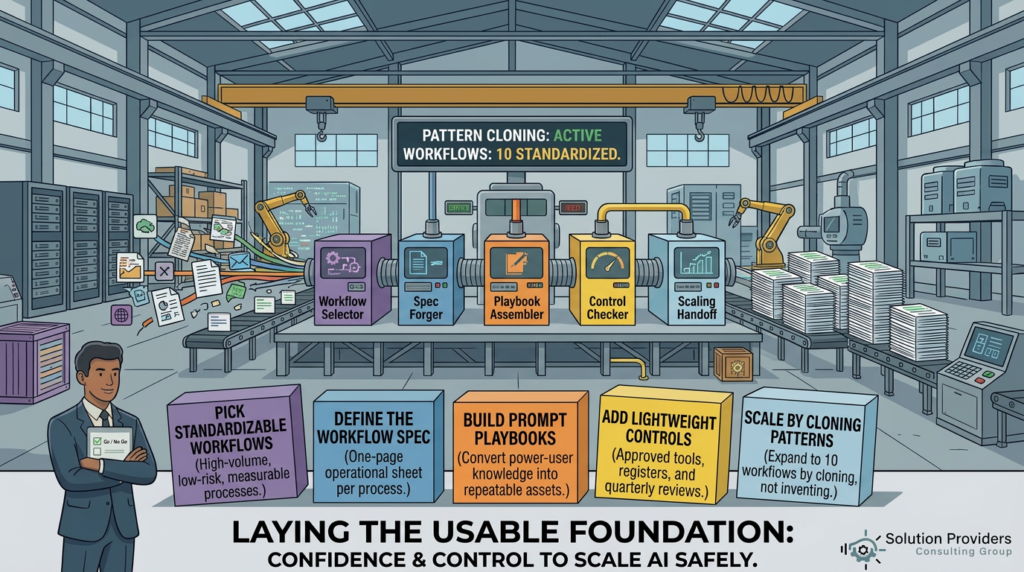
Most AI efforts don’t fail because the model is weak. They fail because the organization tries to scale something that isn’t defined, owned, measured, or controllable yet. Here’s the scaling pattern that works in mid‑market reality. Up to now, we’ve talked about the foundation: defining ‘good,’ ownership and escalation, proof of control, and data boundaries. […]
Data Boundaries (In Plain Language)
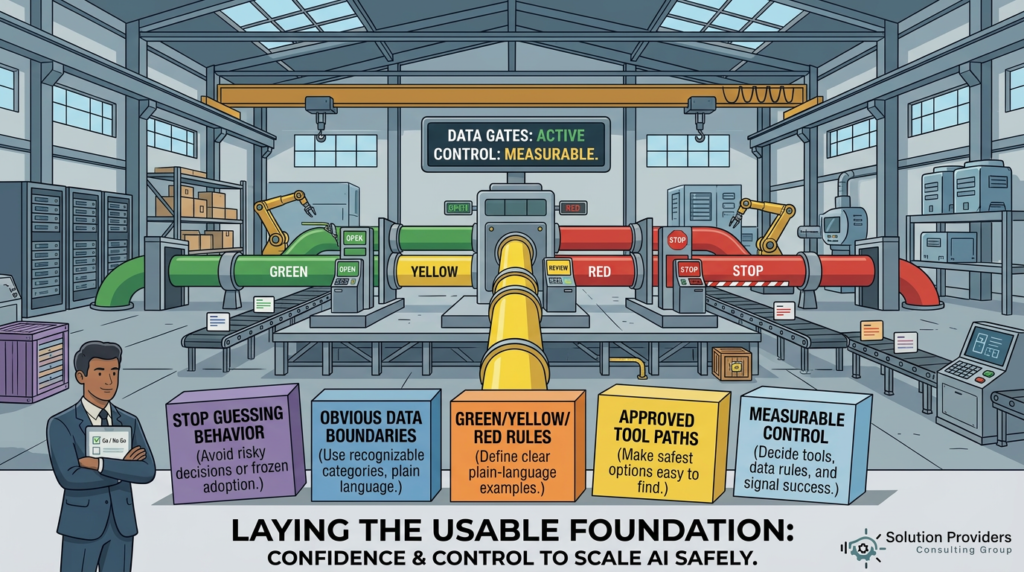
Most ‘shadow AI’ problems aren’t caused by bad people. They’re caused by unclear rules. If you want safe adoption, make the boundaries obvious – and make the approved path easy. Here’s what I see over and over in mid‑market environments: leaders say they want AI adoption, but teams don’t know what they’re allowed to do […]
‘Proof of Control’ (Without Slowing Everyone Down)
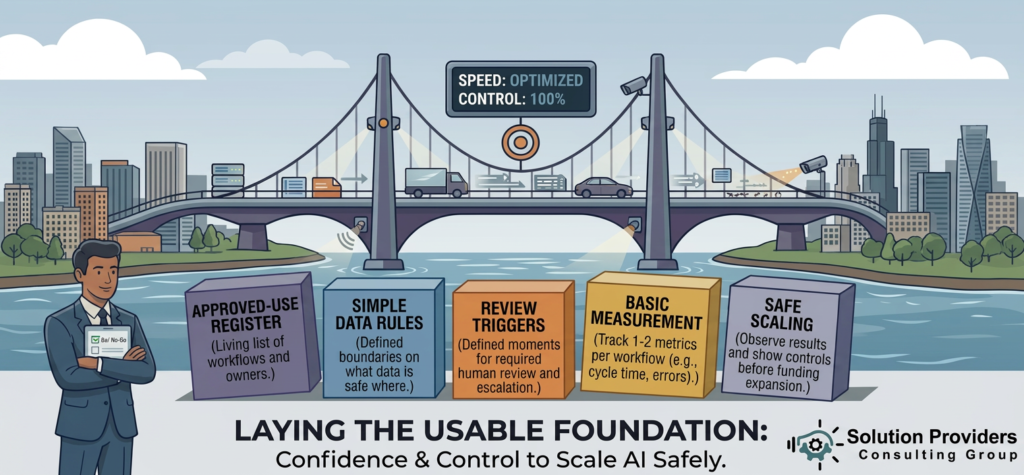
Most mid‑market leaders don’t want ‘AI governance.’ They want confidence: that the business can move fast and still explain what happened if something goes wrong. Let’s talk about the phrase that makes people tense: “proof of control”. It sounds like audits, screenshots, and paperwork. But in practice, proof of control is just your ability to […]
Ownership Beats Enthusiasm (Risk, Value, and Escalation)
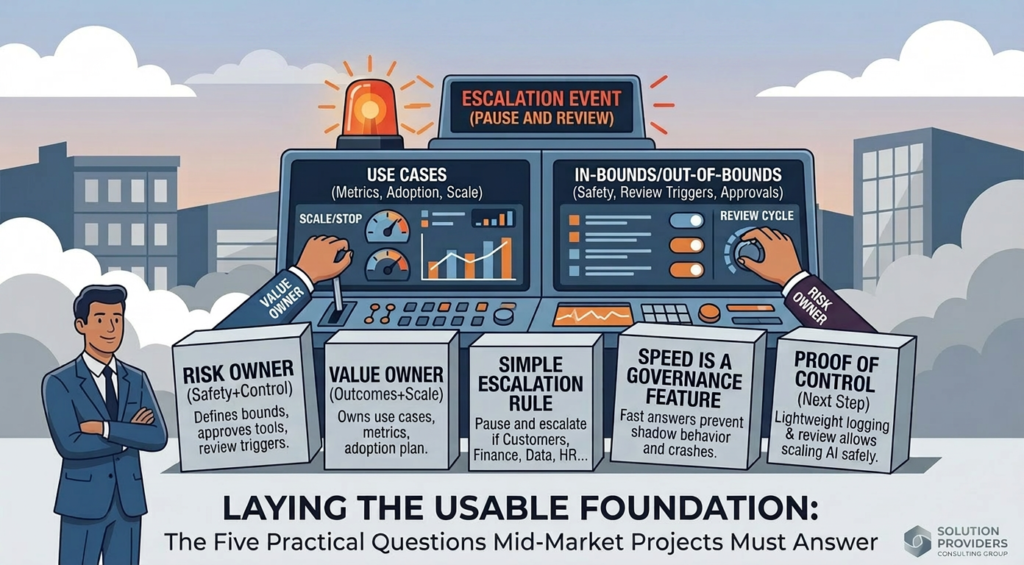
AI adoption doesn’t usually break because people don’t care. It breaks because nobody knows who can say yes, who has to say no, and what happens when something feels ‘off.’ If you want the truth about AI in the mid‑market, it’s this: everybody is interested, but nobody wants to be blamed for a failed project, […]
Define ‘Good’ Before You Ask AI to Help
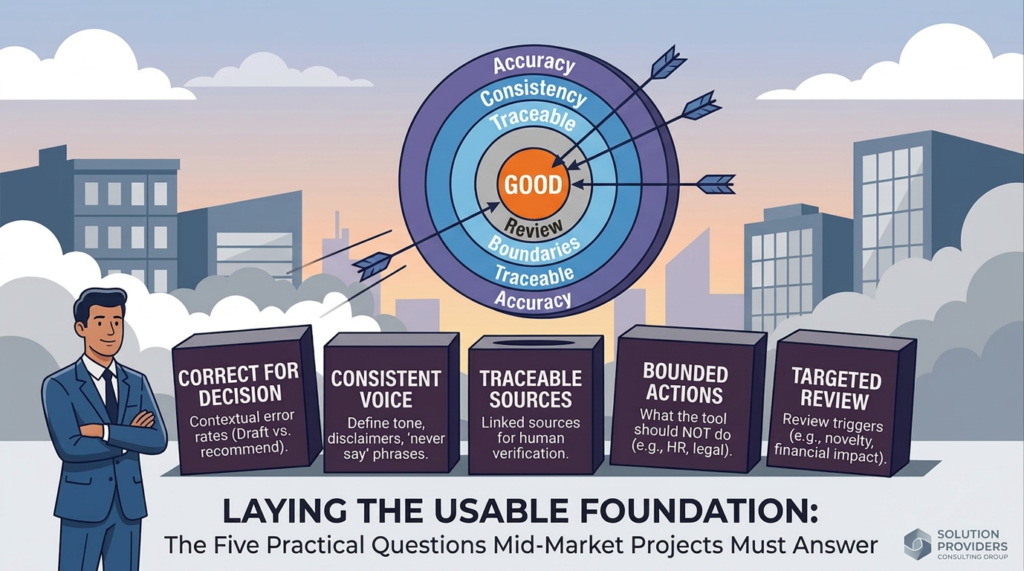
If you want the business to trust AI output, you have to define what ‘good’ means. Not in theory—in the exact places where AI touches customers, money, and decisions. Here’s a quiet reason a lot of GenAI rollouts stall: people try it, get a few answers that are ‘almost right,’ and then they stop using […]